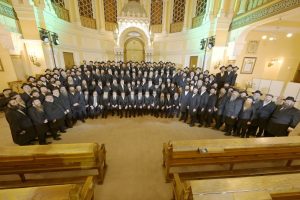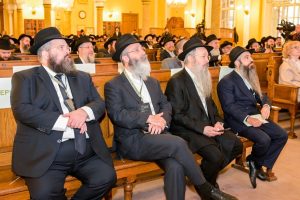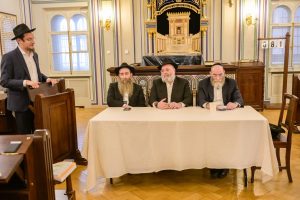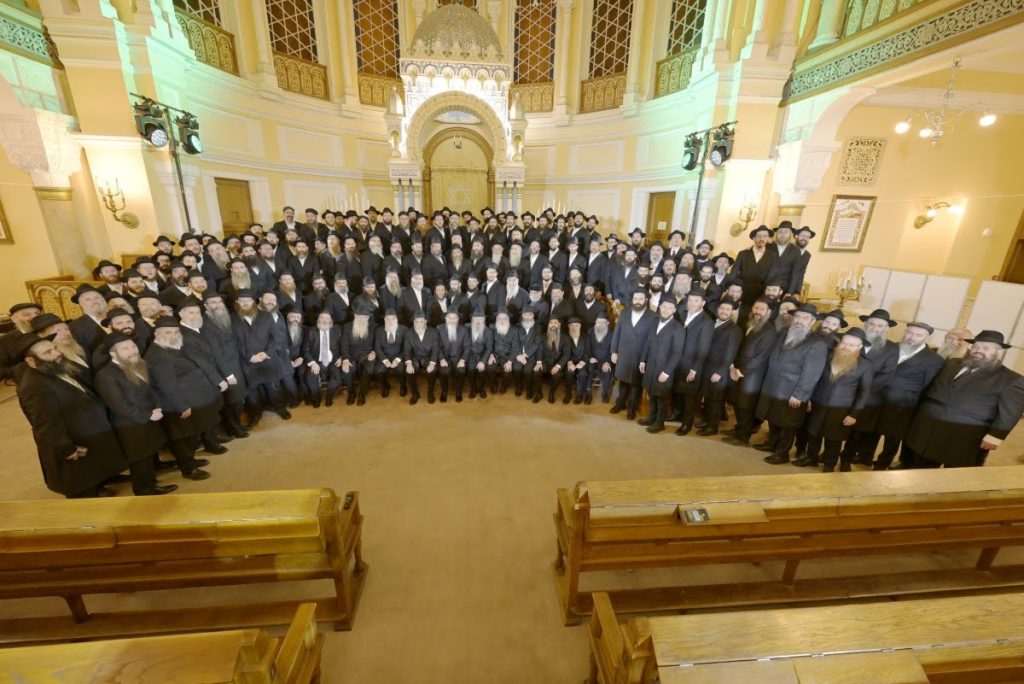
Over 200 community rabbis and Chabad-Lubavitch emissaries from across Russia and neighboring FSU countries, including Azerbaijan, Belarus, Kazakhstan, Uzbekistan, and Georgia, gathered in Petersburg, Russia – under the auspices of the Federation of Jewish Communities (FJC) – for a special regional rabbinical conference dedicated to strengthening Jewish life, education, and communal leadership throughout the region.
The conference opened on Friday morning in the historic Grand Choral Synagogue of Petersburg, hosted by the city’s Chief Rabbi, Rabbi Menachem Mendel Pewzner, and organized by the director of Petersburg’s Jewish institutions, Rabbi Chaim Shaul Brook.
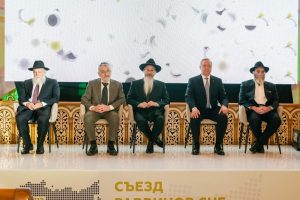
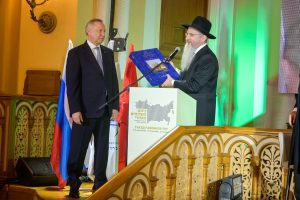
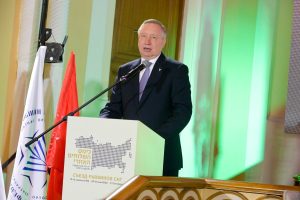
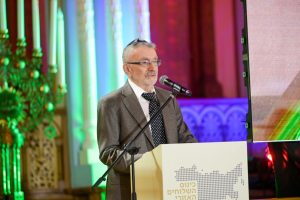
The opening session was attended by public and communal leaders, including Petersburg Governor Mr. Alexander Beglov, who was presented with a special gift by Russia’s Chief Rabbi, Rabbi Berel Lazar, in honor of his 70th birthday and in appreciation of his support for the city’s Jewish community and for hosting the conference. Also present were Rabbi Alexander Boroda, President of the Federation of Jewish Communities of Russia, and Mr. Mark Grubarg, head of the Petersburg Jewish community.
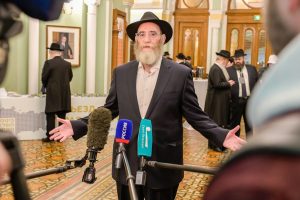
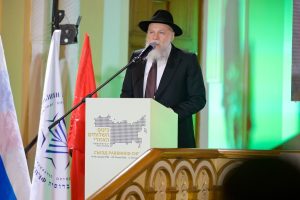
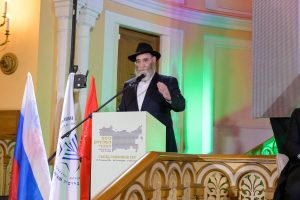
In his keynote address, Rabbi Lazar connected the historic legacy of Jewish perseverance in Petersburg with the growing responsibility of today’s rabbis to expand Jewish education and community life. Marking 99 years since the arrest of the Previous Lubavitcher Rebbe, Rabbi Yosef Yitzchak Schneersohn, Rabbi Lazar recalled the Rebbe’s well-known words, spoken at the Petersburg train station before he was sent into exile: “Only our bodies were sent into exile, but our souls were never sent into exile.” Rabbi Lazar emphasized that challenges are meant to be overcome through increased commitment and action, calling on the rabbis to ensure that every Jewish child has access to a strong and rooted Jewish education.
During the address, Rabbi Lazar also outlined major plans for the upcoming centennial year of the Previous Rebbe’s liberation, including preparations for a broad expansion of Jewish educational institutions and the establishment of overnight summer camps expected to serve over 1,000 children in Russia in the coming year.
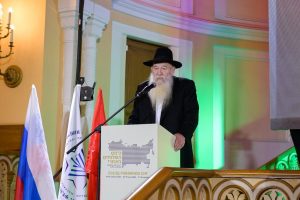
Rabbi Pewzner, the host of the conference, shared a moving historical memory from 24 years ago, when former United States President George W. Bush visited the synagogue during the 75th anniversary of the Previous Rebbe’s arrest.
At the time, he was told about Torah scrolls that had been hidden in the synagogue’s attic during the difficult years of the siege of Leningrad, and about the Rebbe’s words that they would one day be used again in Russia. Today, Rabbi Pewzner said, those Torah scrolls have been restored and distributed to new communities that have developed around Petersburg, showing the fulfillment of that vision. He concluded with a message of unity and mutual support, stressing the importance of rejoicing in the success of another rabbi or emissary and strengthening one another in their shared mission.
One of the most emotional moments of the conference came when Rabbi Yitzchak Kogan stood before the participants and recited Birkat Kohanim. The moment marked a powerful closing of a circle, as Rabbi Kogan had left Petersburg 40 years earlier with great self-sacrifice and had now returned to spend Shabbat there for the first time.
The second part of the conference included a series of professional panels and workshops addressing the practical needs of Jewish communities in the region. Topics included strengthening Jewish educational institutions, addressing challenges in kashrut, and increasing participation in both formal Jewish education and informal community programs. A special session focused on physical and emotional wellbeing as an essential foundation for successful communal leadership, while a highly attended workshop focused on the use of artificial intelligence tools to help rabbis prepare classes, manage community programs, and streamline daily responsibilities without requiring prior programming knowledge.
As Shabbat began, the rabbis joined together for Kabbalat Shabbat in the main sanctuary of the Grand Choral Synagogue. The prayers and Chassidic melodies of the hundreds of participants filled the historic building, creating a deeply uplifting atmosphere. Petersburg’s unique “White Nights” during the months of Sivan and Tammuz allowed the rabbis to continue the Shabbat Chassidic gatherings for many hours in a spirit of inspiration and unity.
Following Shabbat and a late-night Havdalah, the rabbis gathered on the banks of the Neva River for a special unity program. Aboard two large boats passing along the river and beneath the city’s opening bridges, the emissaries shared a festive meal accompanied by stories about the Jewish historical events connected with the city.
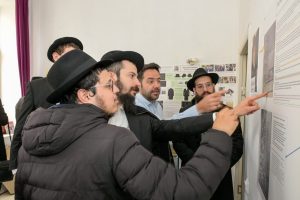
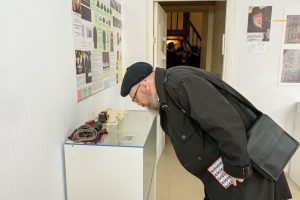
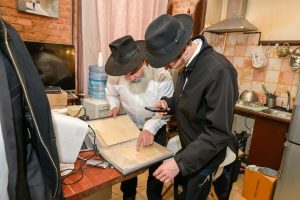
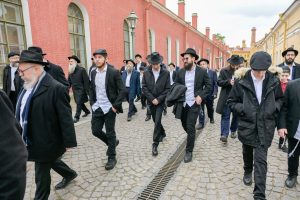
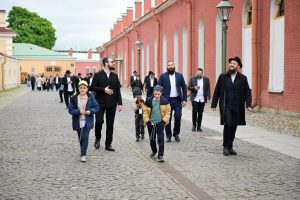
On Sunday, the 15th of Sivan, the participants devoted the day to a historical journey connected to 99 years since the Previous Rebbe’s arrest in Soviet Russia for his devoted efforts to preserve Jewish life. The rabbis visited the apartment from which the Rebbe was taken by secret police, then continued to sites connected with earlier chapters of Chabad history, including the palace of Paul I, who signed the release of the Alter Rebbe on the 19th of Kislev, and the Peter and Paul Fortress, where the founder of Chabad Chassidism was imprisoned for 53 days in a dark cell without windows.
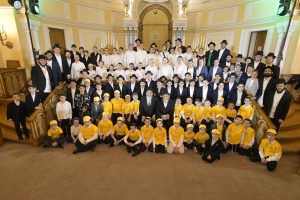
Parallel to the rabbinical conference, nearly 100 children of rabbis and emissaries participated in a rich educational program led by dedicated counselors.
Photo: Maria Istomina