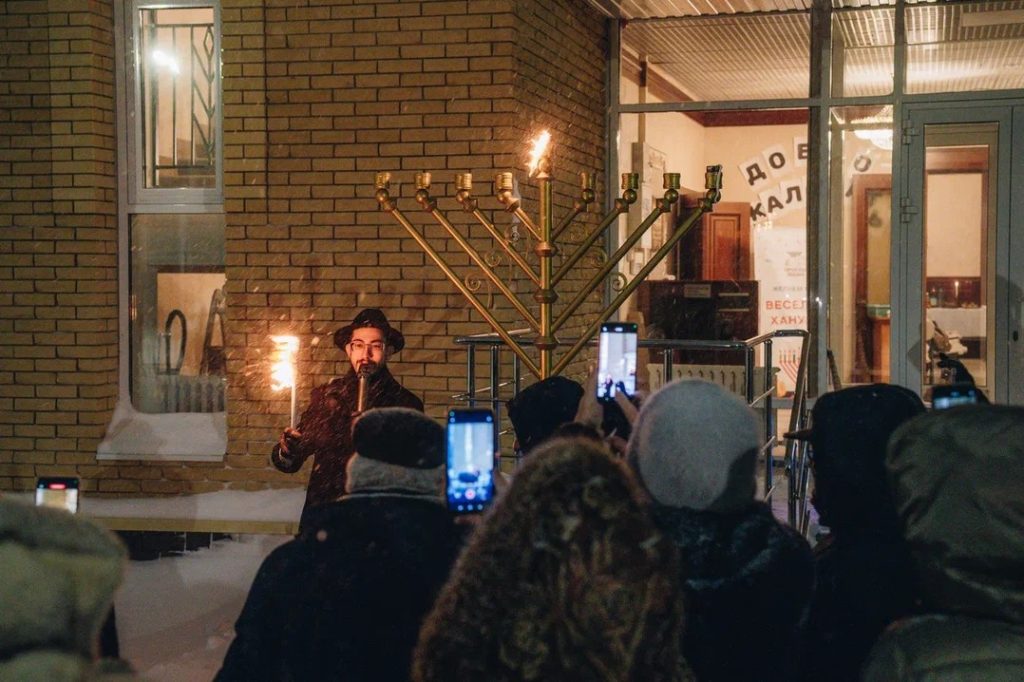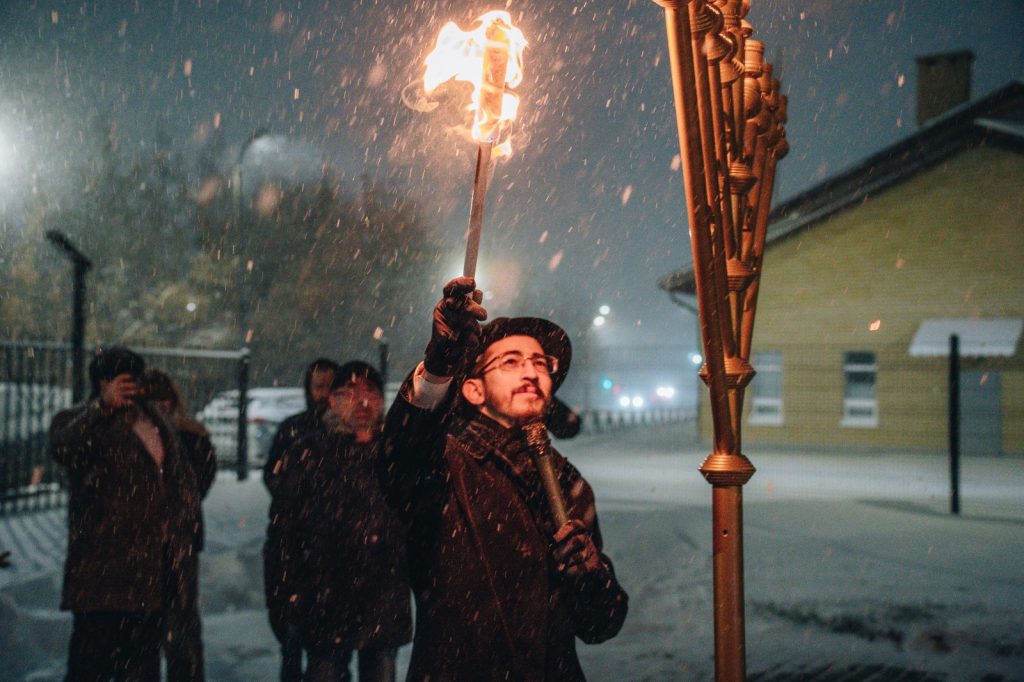
An orphaned boy who came to the synagogue in Kazan to recite Kaddish for his father has come full circle as a Chabad emissary in a Muslim-majority republic. The story of a young Shliach whose life reflects the meaning of the ‘Festival of Liberation’ on 12 Tammuz.
Jewish Life
By Menachem Cohen | Sichat HaShavua
Profile. Rabbi Chaim-David Paer was born in Kazan, the capital of Tatarstan, a Muslim-majority republic within the Russian Federation. Today, at the age of 25, he serves as the Lubavitcher Rebbe’s emissary and rabbi of the city of Naberezhnye Chelny, the second-largest city in the republic.
Childhood. My connection with Jewish life was very faint. When I was seven years old, we were taken on a visit to the synagogue. It was during the festival of Sukkot. I clearly remember the smell of the schach, the fragrance of the etrog, and the delicious honey cake. The image of the Lubavitcher Rebbe also became engraved in my memory.
Kaddish. My father passed away when I was eleven. My aunt suggested that I go to the synagogue to recite Kaddish. I was welcomed there by the Shliach to Kazan, Rabbi Yitzchak Gorelik. His warm “Shalom” touched me deeply. Years later, I came to understand that “a person’s emissary is like the person himself”; in truth, through the Shliach, it was the Rebbe—the one who had sent him—who was saying “Shalom” to me and awakening my soul.
Preparation. As my bar mitzvah approached, I asked Rabbi Gorelik to prepare me for the occasion. He taught me about prayer, the structure of the siddur, and also the importance of brit milah. I remember the first time I touched tefillin. I asked the rabbi why he had two pairs, and he answered: “One is Rashi and the other is Rabbeinu Tam. I will give you a pair of Rashi tefillin as a bar mitzvah gift.” So, I asked him, “And what about Rabbeinu Tam?” The rabbi replied, “You will receive those in yeshivah…”
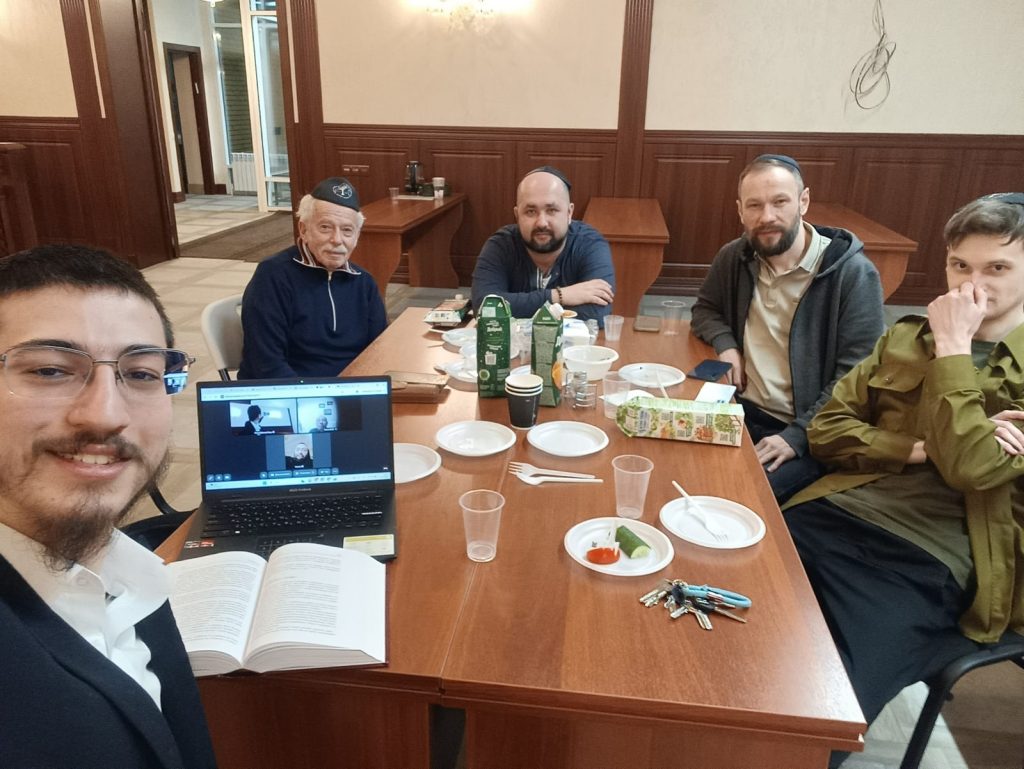
Bar Mitzvah. The celebration was very moving. My friends from school came, and thanks to Rabbi Gorelik, I also delivered a beautiful speech. I began praying every day—at first, simple prayers for young children, as the rabbi advised, and later I gradually advanced to the regular prayers.
Progress. From my bar mitzvah onward, I began progressing slowly in Jewish life. I became interested, studied, and explored. I started wearing tzitzit. My mother supported me and gave her full backing to my decisions.
Brit Milah. I decided to have a brit milah after reading a story about a Jew who was asked whether he had not been afraid to undergo circumcision during the terrifying days of the KGB. He answered that he was more afraid not to have a brit milah… My mother was very worried, since I am her only son.
Persuasion. One Shabbat, when I went with my mother to the synagogue, there was a guest there, Rabbi Yehoshua Raskin. I suggested to Rabbi Gorelik that perhaps he could persuade my mother. In the middle of the Shabbat meal, Rabbi Raskin turned to my mother and said: “A Jewish mother is like a lioness who protects her children, but a Jewish mother also knows that brit milah is the very best thing for her son.” My mother was deeply moved and agreed.
Yeshivah. When I was eighteen, I went to study at the Chabad yeshivah in Moscow. I was moved to see happy people there. In my school, everyone had been depressed. I made major steps in Jewish life thanks to Chabad’s youth organization in our countries—EnerJew. They provided me, and many of my friends who went through a similar journey, with Jewish content that helped us greatly.
Rabbinic Ordination. From there I traveled to study at a yeshivah in Migdal HaEmek, headed by Rabbi Akiva Goldshmid, and I received rabbinic ordination. Afterward, I returned to Moscow to serve as a Shliach in the Metivta educational institution. Later, I was privileged to establish my own Jewish home, and Rabbi Gorelik and his wife accompanied me to the chuppah, giving me the feeling that I had a true family.
Shlichut. Then came the surprise: Russia’s Chief Rabbi, Rabbi Berel Lazar, suggested that we become Chabad emissaries in the city of Naberezhnye Chelny, in Tatarstan. I felt that this was my life’s mission—a full circle, in which I return to the region, this time as a leader whose role is to kindle light for others.
Mother. My mother grew closer to a life of Torah and mitzvot observance, and today she sanctifies G-d’s name at her workplace in the advertising industry in Kazan. She is highly respected there, and at the company’s large events they order kosher food for everyone—so that she, too, will be able to eat.
Redemption. The ‘Festival of Liberation’ of the previous Lubavitcher Rebbe is the festival of liberation of every Jew in the former Soviet Union. Were it not for that day, I would not be living as a Jew at all. It is a very great miracle, and in its wake Jewish life is flourishing today throughout all these countries.